
Company News
Something Groundbreaking Is Coming to WEFTEC26
… SOMETHING’S COMING We’re Just a Week Away from the Introduction of

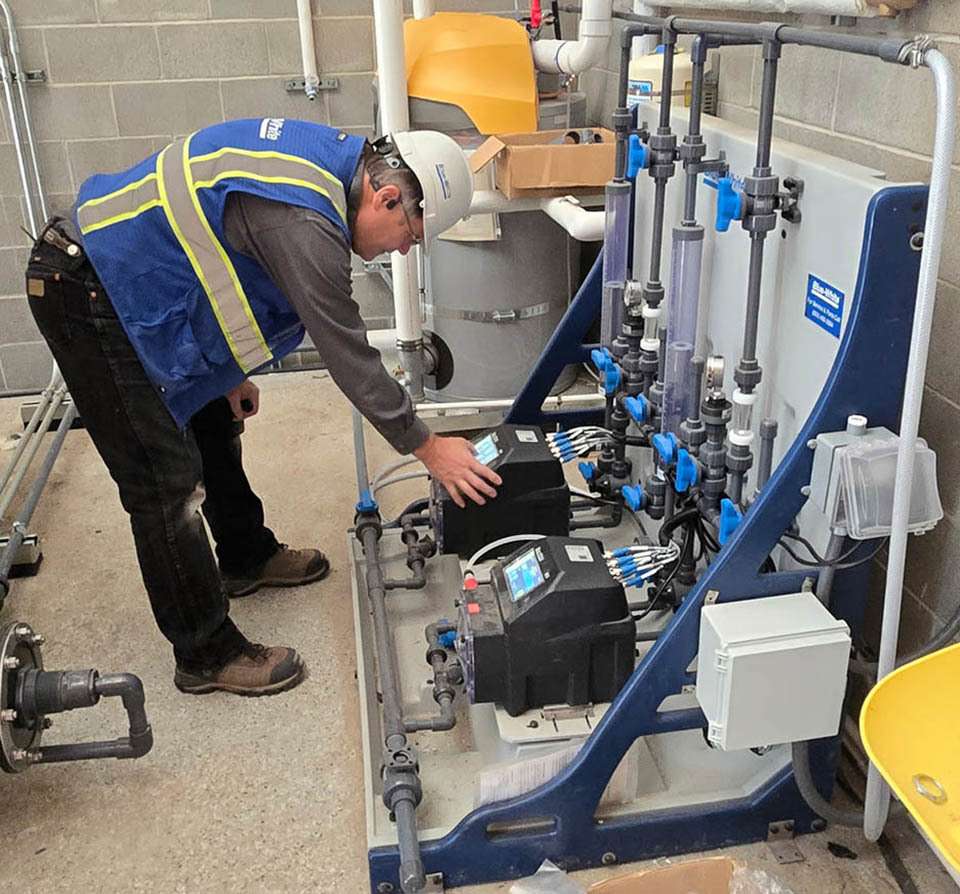
In the water treatment sector, significant institutional knowledge is being lost as many veteran operators retire. As these experienced workers depart, they take with them decades of tacit knowledge and understanding of legacy analog systems, such as chemical metering systems.
To offset the loss of undocumented expertise, water plants are increasingly moving from reactive, manual adjustments to predictive, automated digital control loops. But future-proofing a facility is not about buying new hardware; it is about specifying field equipment today that can communicate with evolving SCADA and industrial network architecture.
The 4-20mA analog control loop has long been the industry standard. While reliable for simple tasks, these systems are limited in capability. An analog signal can generally only communicate one piece of data, such as pump motor speed. For the pump to receive a command, a second 4-20mA connection is needed. Additionally, these systems are highly susceptible to noise, or electrical interference from other equipment, which can lead to false readings and operational disruptions.
In contrast, modern industrial networks (including Modbus TCP and PROFIBUS) offer a massive increase in data density through a single jack. Moving to a digital protocol allows a single connection to transmit dozens of data points simultaneously, including motor speed, alarm status, and speed reference feedback. This less-is-more approach reduces wiring complexity while significantly curbing the risk of signal interference.
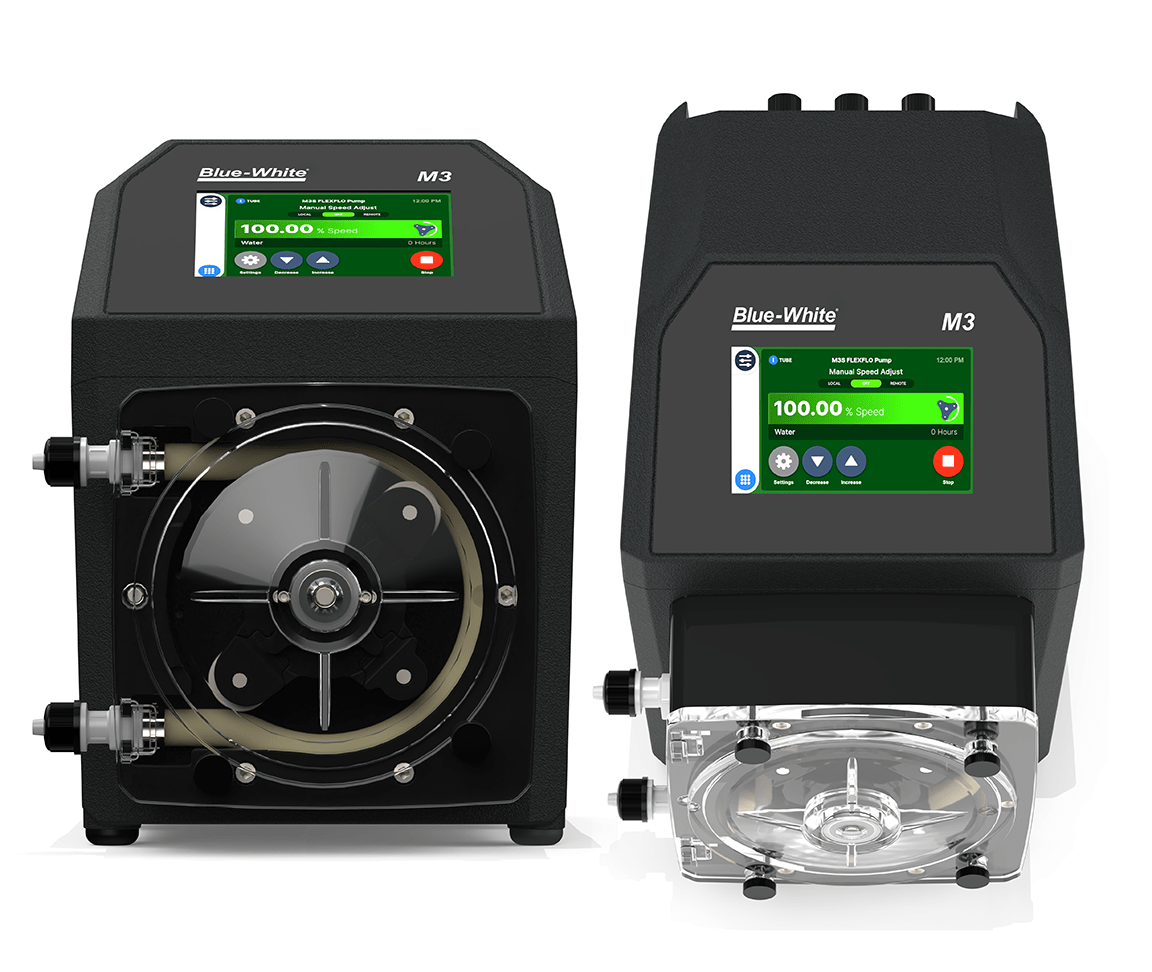
True automation readiness requires real-time, bi-directional data flow between the pump and the SCADA system. When smart pumps are integrated into a modern digital architecture, they provide critical diagnostic data that prevents chemical overdosing and curbs regulatory risk.
Advanced diagnostic data points include:
Some lower-cost equipment options lack native digital communication capabilities. Integrating these units into a modernized SCADA framework may require external protocol conversion hardware, adding complexity, cost, and additional potential failure points.
Specifying smart pump units with built-in digital capabilities can therefore offer lifecycle advantages, even if the plant is not yet ready to fully utilize them. A pump equipped with both 4-20mA and Ethernet IP can function as an immediate, scalable asset. An operator can install the pump using legacy analog signals now and simply plug in the Ethernet when the plant’s digital transformation is complete.
While communication protocols handle the data, it is the physical motor that executes the actions of the pump. Traditional brush motors lack the accuracy required for high-level systemic automation. Brushless DC motors provide approximately ten times the precision of their brush-style counterparts, responding accurately to the specific commands sent via SCADA.
This precision helps maintain constant chemical flow. It also helps avoid the repetitive ramp-up/ramp-down cycles, which can lead to excess chemical usage and premature wear and tear. Efficient, brushless motors not only aid in precise dosing but also support the broader industry goal of reducing energy consumption and moving toward more environmentally friendly operations.
One major hesitation to automating is the fear the system might fail during the transition. However, modern intelligent interfaces allow for a hybrid approach where both 4-20mA and Ethernet IP are connected simultaneously. This allows operators to compare the signals and verify system performance before fully transitioning to digital control. Once the plant is confident, they can switch the entire system to Ethernet IP with less disruption to existing operations.
Specifying future-proof technology like Blue-White’s intelligent digital interfaces can help extend the useful life of a facility’s capital investment. By standardizing with smart, modular equipment that offers native industrial protocols and brushless DC precision, plant managers can increase the flexibility and long-term value of their equipment investments.
Ultimately, automation is not just about replacing human effort; it is about creating standardized, repeatable, and reliable processes that make the transition easier for the next generation of water professionals. By choosing equipment that functions as a scalable asset, facilities can move toward a modernized, automated setup that is prepared for whatever the future of the water sector holds.
Written by:
Blue-White® Industries
714-893-8529
… SOMETHING’S COMING We’re Just a Week Away from the Introduction of
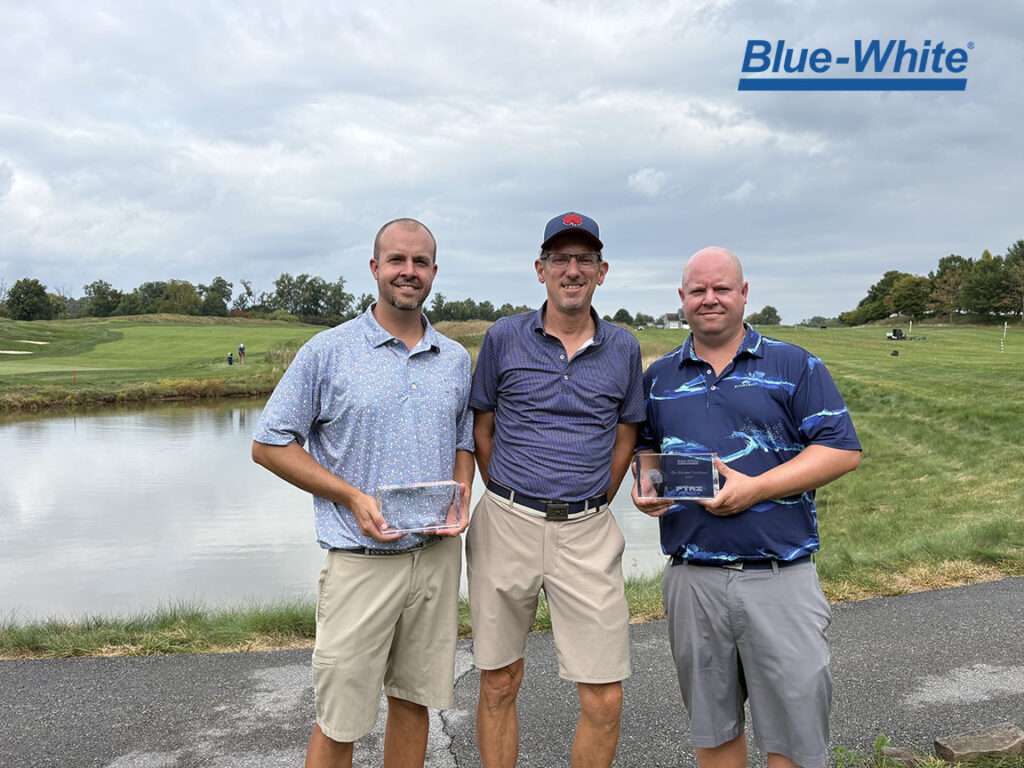
Blue-White TWO Award presented to Pyrz Water for Top Municipal Distributor in the Mid-Atlantic territory, a water industry distributor recognition
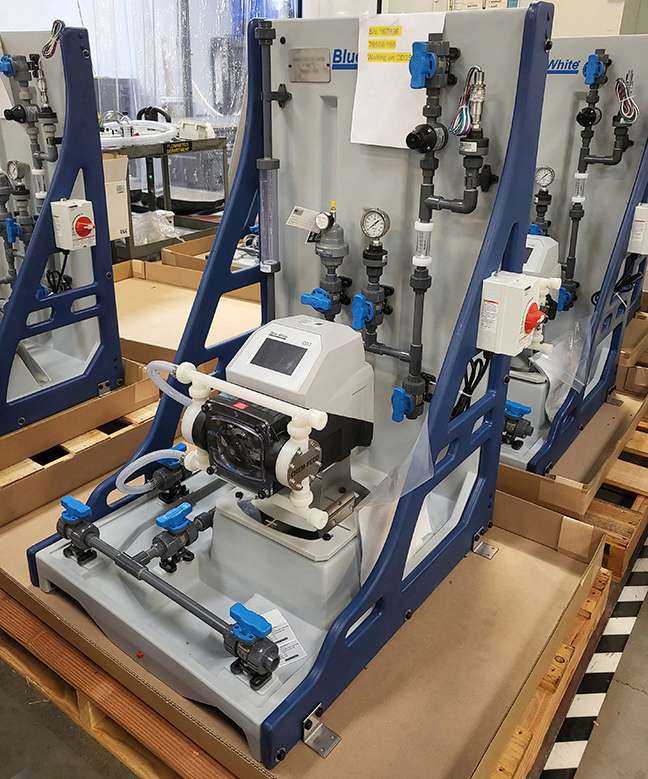
chemical feed system upgrade with no downtime chemical dosing using modular skid architecture chemical dosing for municipal water treatment retrofits

Words Like Groundbreaking, Revolutionary, and Innovative are Just a Few of the