Company News
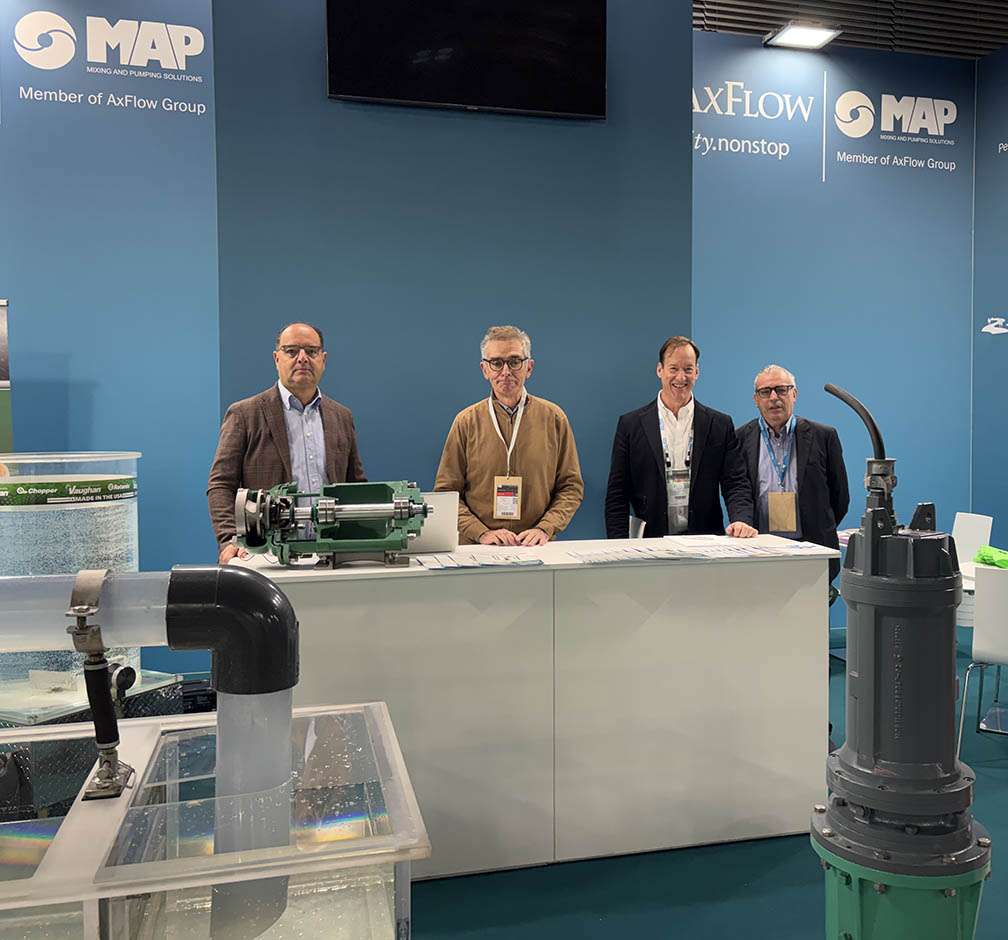
Meet Blue-White® and MAP at Ecomondo, Europe’s Leading Green Transition Expo
Our Team is at the Ecomondo Environmental Show in Italy – Europe’s


Polymers play a critical role in drinking water and wastewater treatment. When they fail to perform, the results can include poor floc formation, shorter filtration run cycles, wetter sludge cakes, and ultimately higher chemical costs. Operators may blame poor polymer chemistry, water chemistry, or even the make-down skid. A potential culprit that’s often overlooked is the chemical metering pump. The wrong chemical metering system can result in inconsistent dosing and polymer degradation, and if the pump continues to run, these problems may go unnoticed.
To maintain consistent dosing and preserve polymer integrity, operators and maintenance managers should understand both how polymers impact metering pumps, and how the metering pump itself can impact polymers. By selecting the right metering pump, operators reduce the risk of polymer failure, thereby saving money and supporting reliable treatment outcomes.
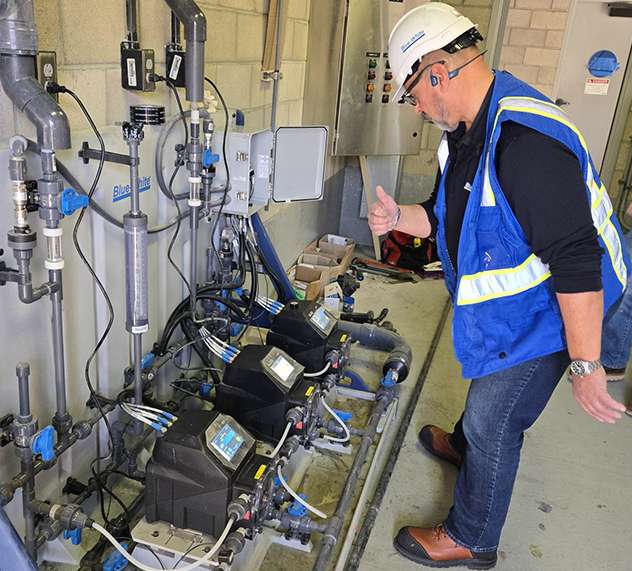
For decades, diaphragm pumps have been the to go-to technology for dosing polymers. These metering pumps include check valves, seats, springs, and ball checks within the pump head. The viscosity and tacky nature of polymers can cause them to coat seating surfaces, causing checks to stick open or gel shut, which often leads to immediate loss of prime and inconsistent metering. In addition, polymers can also gel inside pump cavities when pumps sit idle. As a result, operators often spend a significant amount of time performing maintenance, taking the pump head apart and scraping expensive polymers off components and into the trash.
Even more problematic can be the rapid, impulsive strokes of a diaphragm pump, which can negatively affect polymers in a number of ways. Diaphragm friction can shear (break) polymer chains, impacting flocculation efficiency. When that happens, operators often compensate by overfeeding chemicals, further increasing costs. Similarly, when the high-impact strokes hit the polymer too hard and fast, before it has had the proper time and mixing conditions, the polymer won’t dissolve and activate evenly. If that happens, instead of smooth, fully hydrated polymer solution, parts of the chemical start to clump together or form a gummy outer skin while staying dry and inactive on the inside. If the polymer exhibits non- Newtonian properties, then the sudden impact of higher pump speeds could alter the viscosity and increase flow resistance, which can decrease the amount of chemical being dosed.
Diaphragm pumps can also struggle with suction when metering thick, neat (inactivated) polymers, which create significant friction against piping walls. This carries the risk of underdosing, particularly in cold weather or unheated buildings. Without regular calibration, metering levels may fluctuate, leading to dosing inconsistencies.
While diaphragm pumps are a familiar technology for many operators, they can be far from ideal for dosing polymers. Peristaltic pumps are often the more effective solution. In a peristaltic pump, the pump tube is the only wetted component; there are no check valves, ball seats, diaphragms, or dynamic seals in contact with the fluid being dosed. The tube’s consistent internal diameter means there are no pockets where polymers can gel, skin, or agglomerate.
In addition, peristaltic pumps use simple metering mechanics. Peristaltic rollers compress the tube in a progressive squeezing action, displacing fluid smoothly. There are no harsh impulse forces or high-friction throttling to damage molecular chains. The gentle tube compression creates a consistent vacuum that supports smooth pumping action, enables self-priming, and eliminates any potential for vapor lock or air binding. This also helps maintain consistent output as line pressures vary.
Many treatment plants employ diaphragm pumps because they are familiar with the technology and because they see peristaltic pumps as low-pressure systems that are only used in labs. However, modern heavy-duty units, such as the Blue-White Industries FLEXFLO® Line can handle viscous industrial chemicals while operating against discharge pressures up to 125 psi.

To maximize peristaltic pump performance, operators must select the correct tubing material, and should choose the largest possible inner tube diameter for running at lower pump speeds. This minimizes fluid velocity, wall friction, and shear stress while extending tube life. In addition, suction lines should be generously sized at a ½” to 1″ minimum, using flooded suction setups to prevent cavitation.
System safety also requires polymer-specific engineering. Neat and emulsion polymers exhibit low electrical conductivity, which makes them difficult to detect with conductivity-based leak sensors. If these sensors fail to detect a leak, slippery, hazardous polymer may start to accumulate. Advanced optical leak detection systems, like Blue-White’s TFD+, address this limitation by using an infrared beam inside the pump head. Leaking fluid refracts the light, instantly stopping the pump and alerting SCADA regardless of fluid conductivity (Figure 1).
Predictive maintenance, as with a built-in revolution counter, can alert operators it is time to change the pump tube before trouble has a chance to occur. Suppose a pump tube is estimated to fail after 1 million revolutions (meaning the tube is compressed and decompressed 1 million times); the revolution timer can be set for between 500,000 and 800,000 revolutions. Once the pump has completed the set number of revolutions, an alert is sent, and the operator can change the pump head tube before failure occurs.
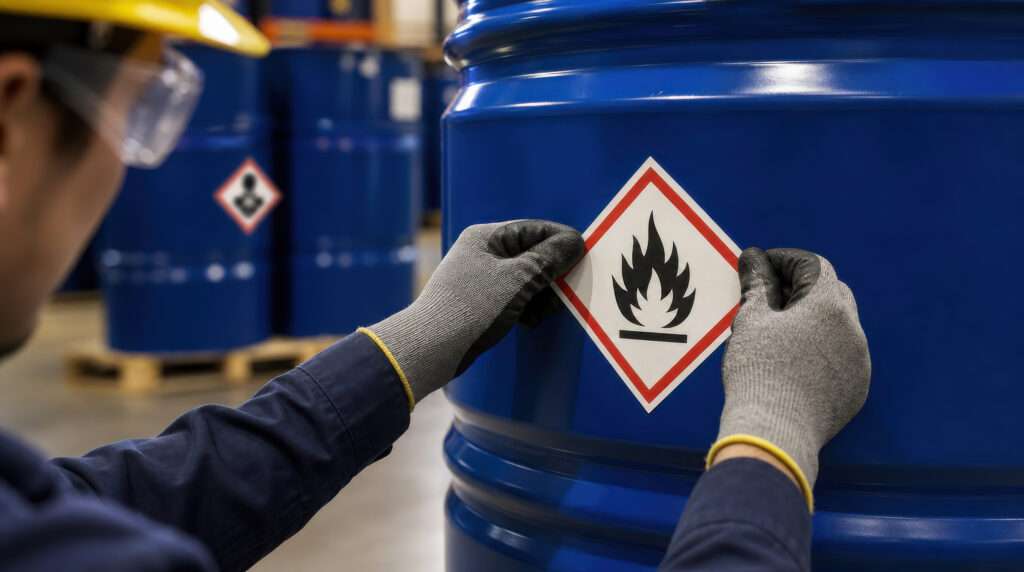
We recommend always labeling the pump with the name of the fluid being dosed to avoid safety issues.
Reliable water treatment requires a chemical metering pump capable of handling complex polymers without causing polymer degradation or costly downtime. Modern feature-rich peristaltic pumps offer a low-shear, self-priming alternative for chemical metering. They are built to handle high viscosity fluids. By pairing peristaltic technology with properly sized tubing and advanced optical leak detection, treatment facilities can reduce chemical waste and avoid many operational hazards. This simple shift in pumping strategy helps safeguard both the budget and the overall treatment process.
Written by:
Blue-White® Industries
714-893-8529
Our Team is at the Ecomondo Environmental Show in Italy – Europe’s
In water treatment operations, chemical metering systems are used to dose many
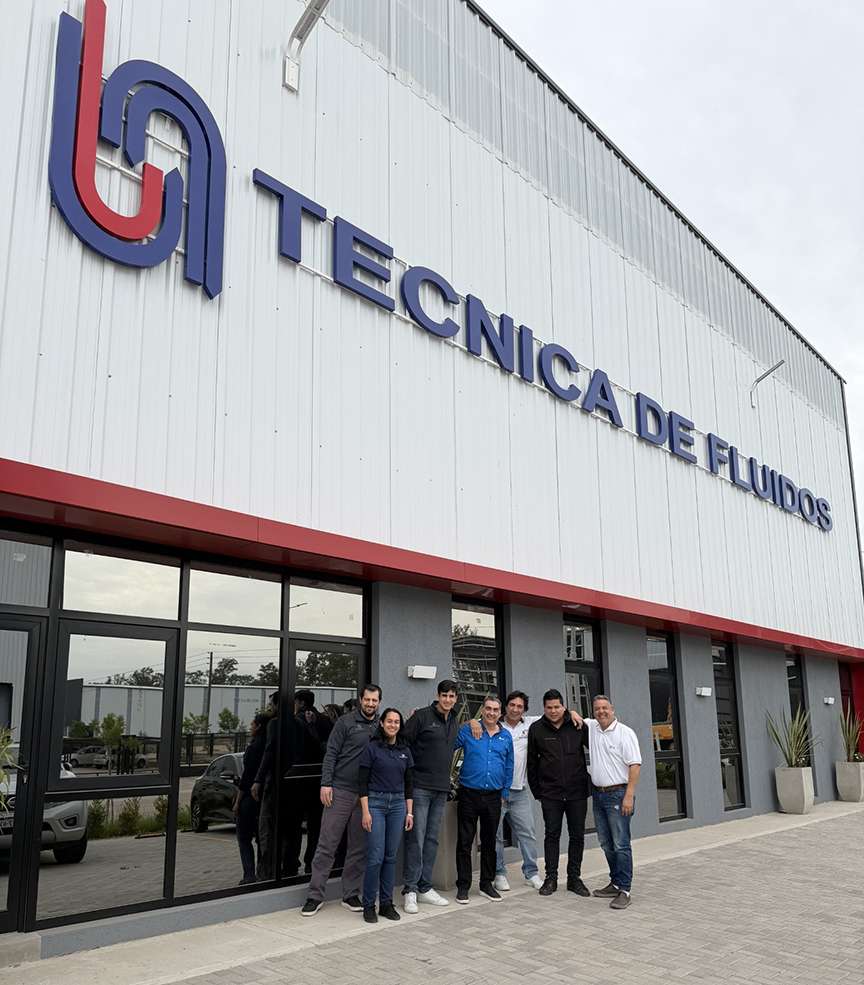
Blue-White distributor training in Argentina: peristaltic pump training at Tecnica De Fluidos’ new distributor facility, with how to schedule pump training

M5 peristaltic pump Halloween costume contest shines with the Blue-White M class peristaltic pump costume at the AWWA Women of Water meeting