Company News
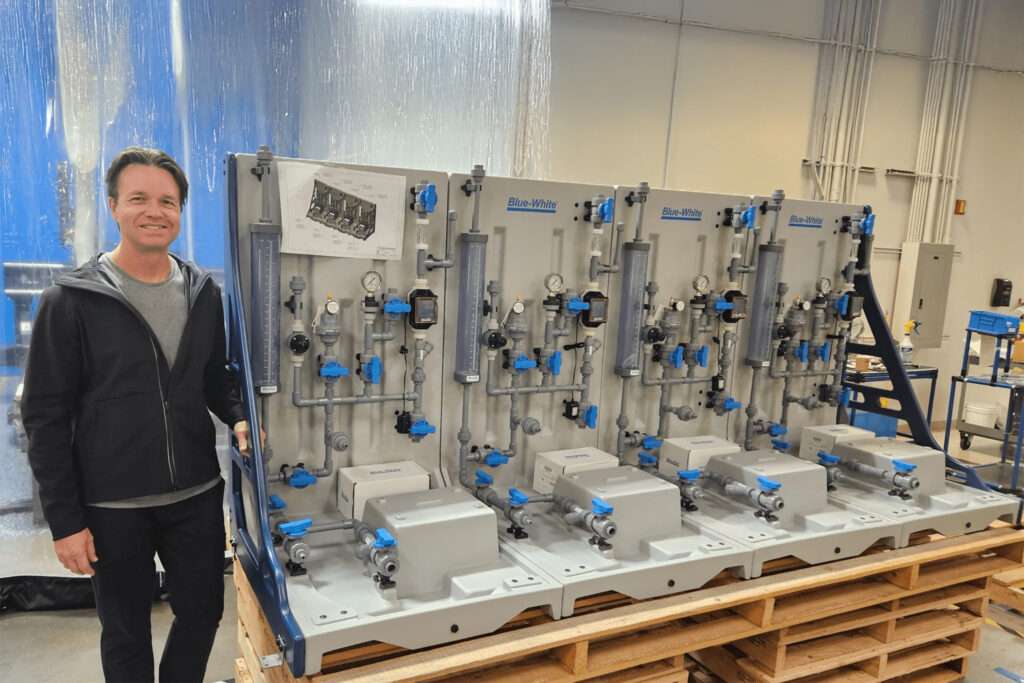
Happy Birthday, Rob! Team Blue-White® Celebrates Our President & CEO
Happy birthday Rob Gledhill Team Blue-White — Blue-White company news celebration highlighting Blue-White CEO Rob Gledhill birthday and leadership culture

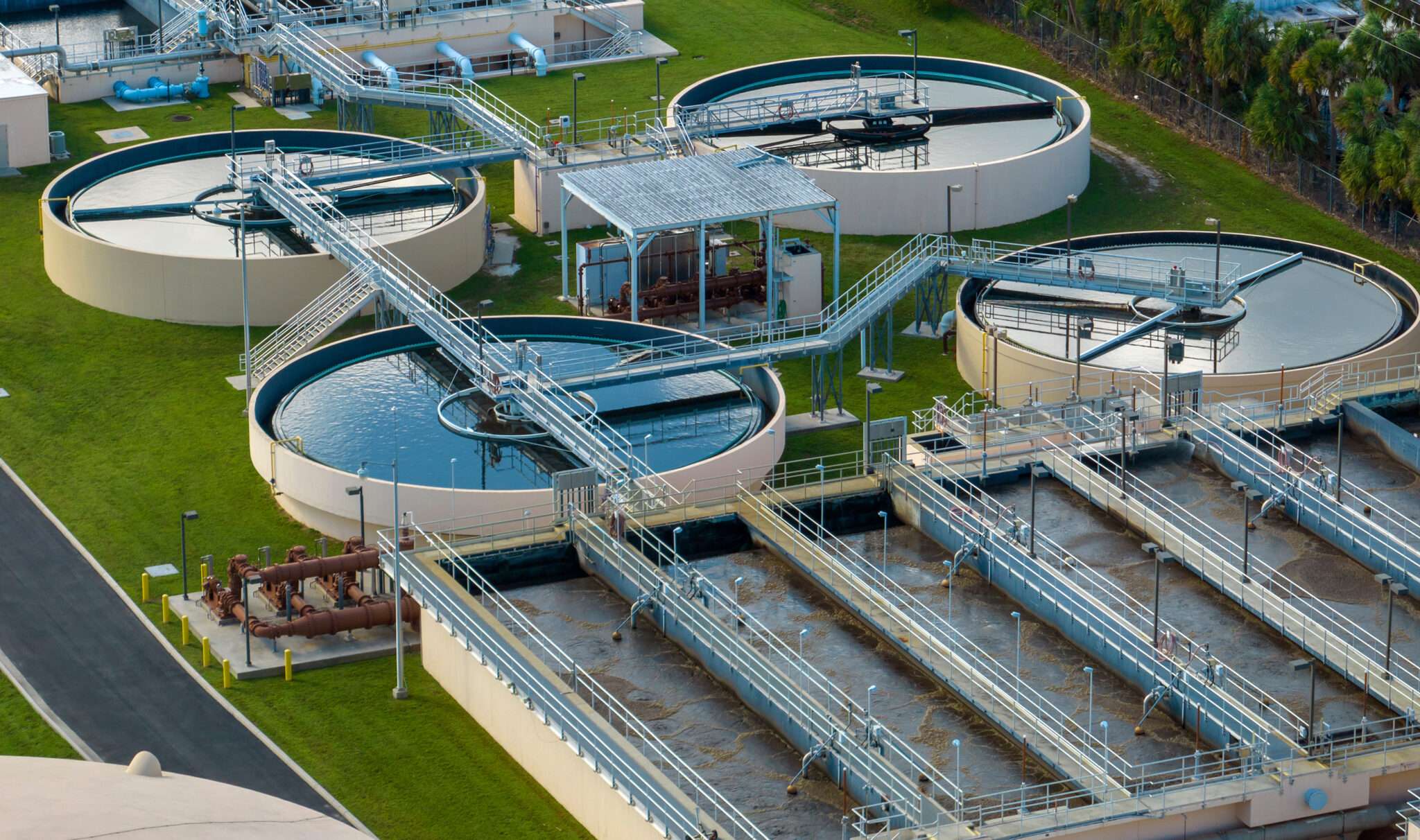
As chemical feed applications continue to advance, diaphragm pumps have adapted to meet a wide range of performance, control, and chemical handling demands. Understanding the different types and their specific strengths is essential in choosing the right pump for the job. With the right selection, operators can ensure reliable, efficient, and low-maintenance chemical dosing in even the most challenging environments.
Chemical feed application changes have been driven by a number of factors, such as an increased demand for “smart” communication and control capabilities, including compatibility with SCADA systems in drinking water, wastewater, and in industrial operations.
Chemical metering pumps are often expected to handle a wide range of flow rates, from very low to high, and to operate reliably at high pressures. Many diaphragm pumps on the market are designed to simply and reliably meet those complex demands, others may not be. Another consideration is, chemical metering applications increasingly involve the use of challenging chemicals, such as those that offgas, highly corrosive chemicals, and viscous solutions. This has led to the availability of a wide variety of specialized pump options at varying price points.
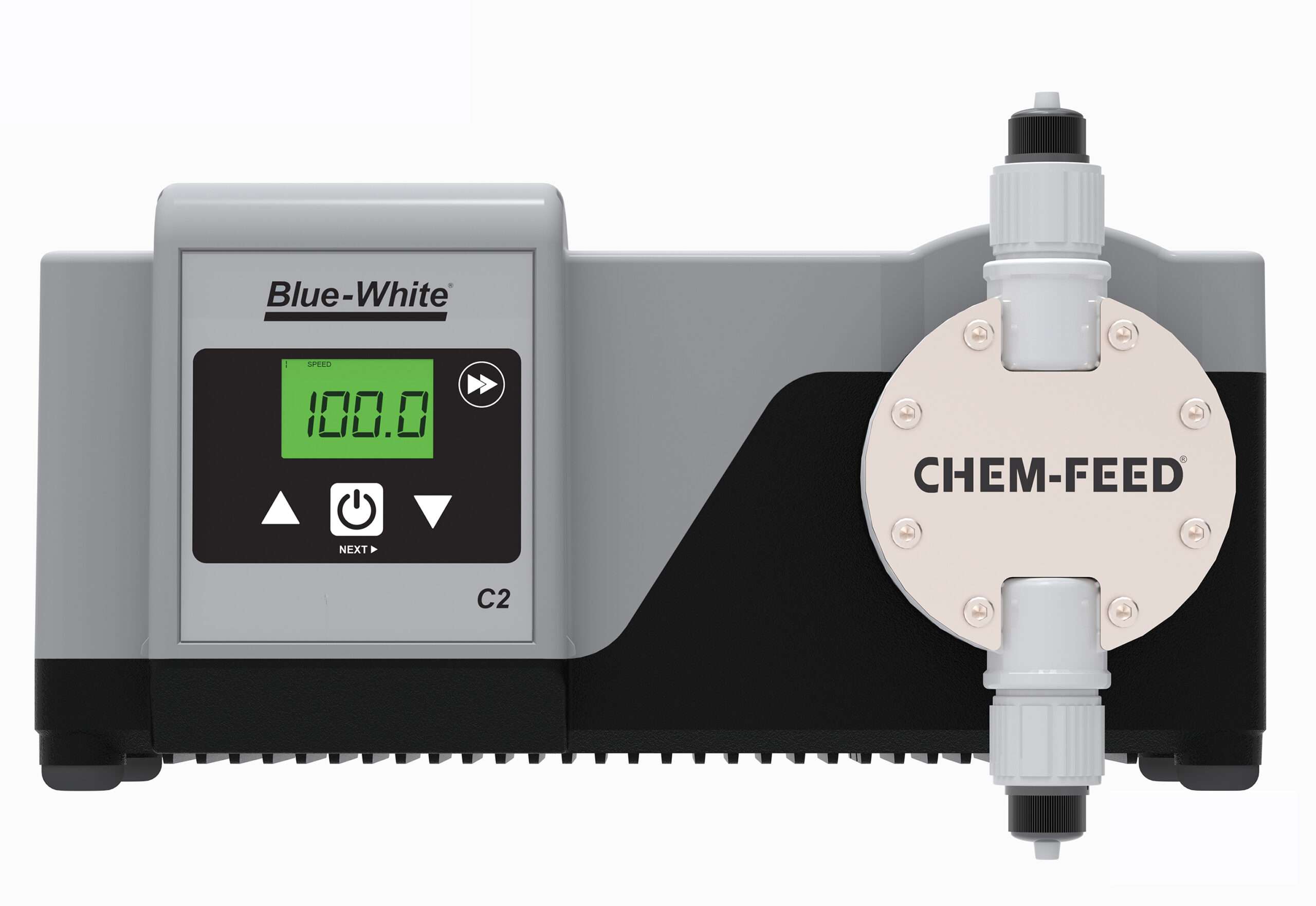
Diaphragm Metering Pumps are known to be both accurate and repeatable. Fluid feed components include the Pump Head, the Diaphragm, and Inlet and Outlet Check Valves.
On the Suction Stroke the diaphragm is pulled backward, opening up space in the pump head and creating a vacuum. The pressure difference causes the inlet check valve to open and fluid is drawn into the chamber. On the Discharge Stroke the diaphragm moves forward, decreasing the space within the pump head and pressurizing the fluid. The inlet check valve will close to prevent backflow, and the pressure of the fluid opens the outlet check valve, allowing it to be discharged from the pump at a precise rate which has been determined by adjusting the pumps’ stroke.
Knowing which type of diaphragm pump is best suited to a particular application is not always easy. It helps to have a good understanding of different motor technologies and optional features.
The first step in choosing a diaphragm pump is to recognize the types of drive systems available and how each impacts potential applications. We’ll discuss some of those here.
Solenoid. These pumps are driven or actuated by an electromechanical pulse. They are less expensive than other drives and are most often used for intermittent service in non-critical processes. They are reliable as long as they are not running continuously for long periods of time, or at maximum capacity or pressure too often. Solenoid pumps work best when consistent and continuous flow are not the top priority, as well as when operating at low pressures and with less challenging chemicals.
Mechanical. Diaphragm pumps with mechanical motors are robust and offer higher flow and pressure capabilities. They are offered with single-speed motors with stroke adjustment, or with variable speed motors and smart speed control for maximum versatility and programming.
Electric, BLDC Motors. Diaphragm pumps equipped with BLDC motors excel in applications requiring continuous operation, where there are high flow rate demands, and when a pump that can perform under higher operating pressure is needed. Electric Drive BLDC motors may initially be more costly, but service life will be longer than that of solenoid-driven pumps.
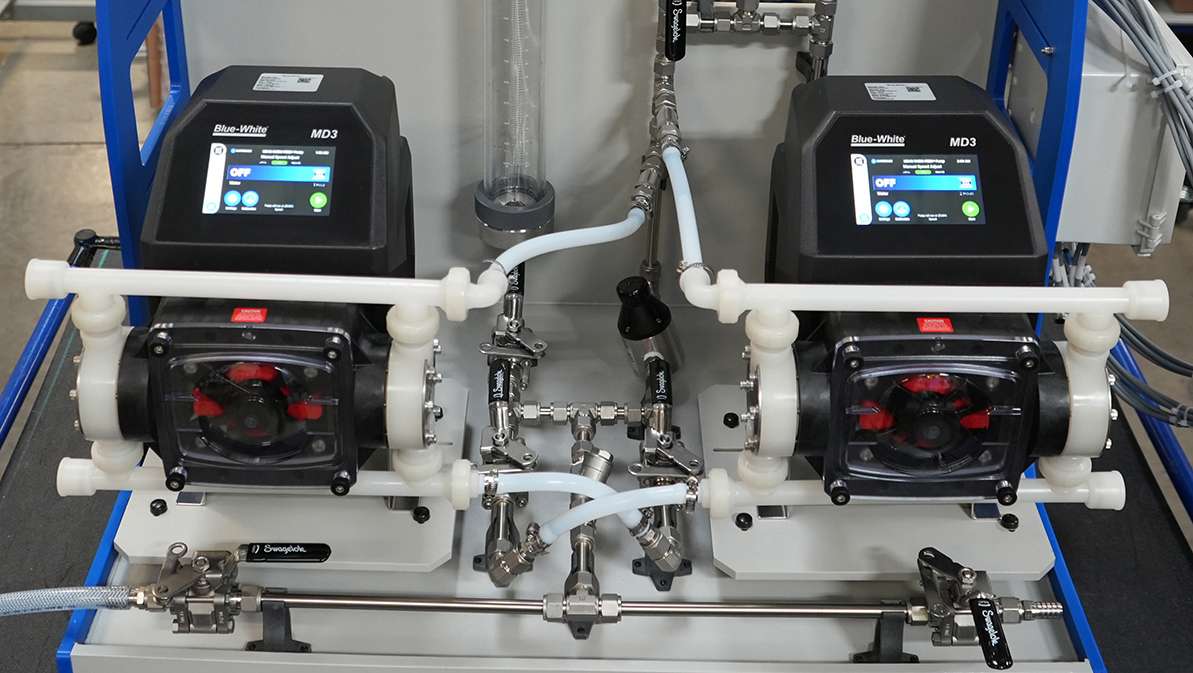
The downside with all diaphragm style pumps is that they can be susceptible to vapor locking when dosing offgassing chemicals However, there are diaphragm pumping units which are engineered to resist vapor locking.
Hydraulic. A pressurized oil interface between the motor drive and the diaphragm gives these pumps the ability to handle higher pressure without excess wear on the diaphragm. Hydraulically driven pumps are durable and reliable, and often come with a number of smart features. However, the features can make them far more expensive than other options, and maintenance can be timeconsuming and costly.
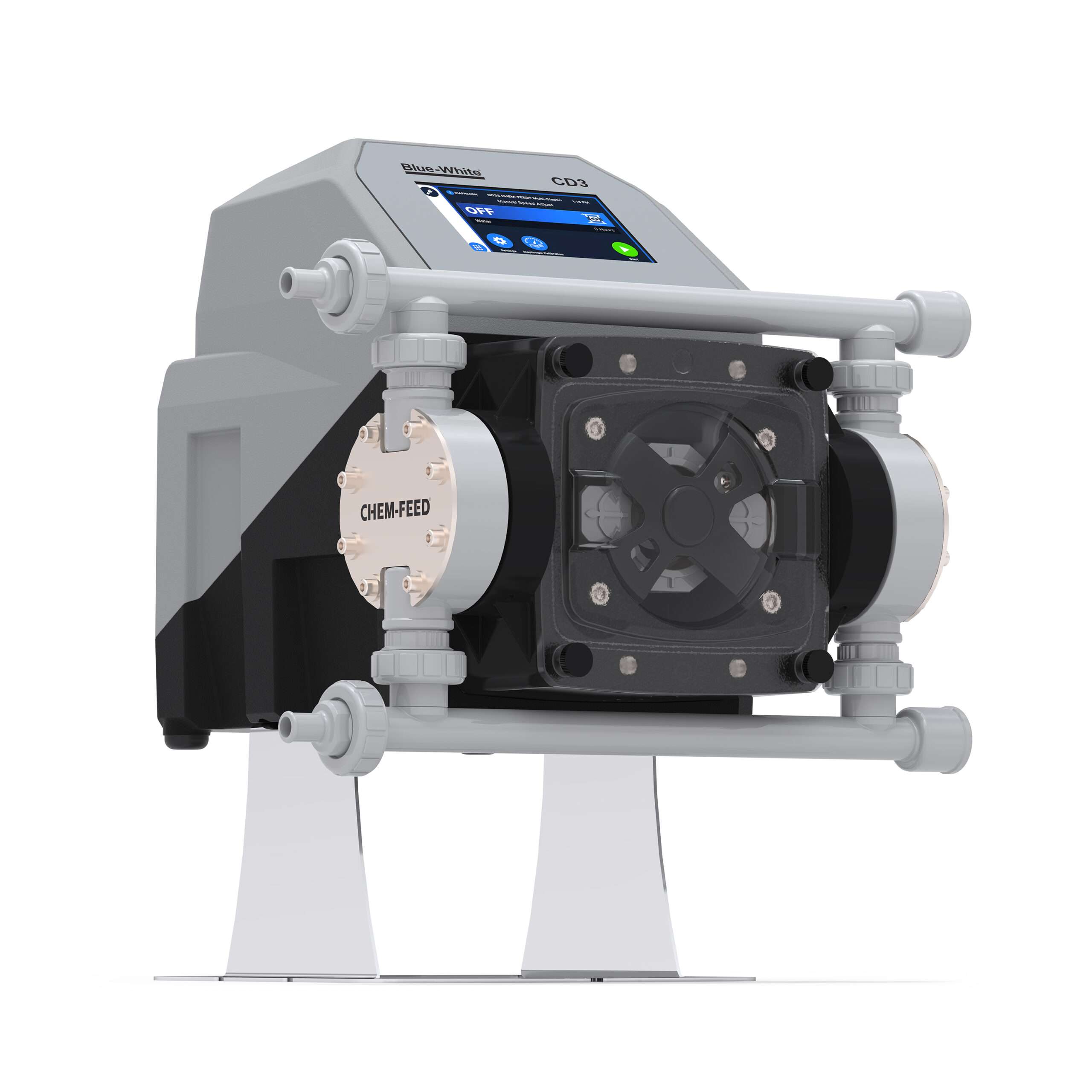
Perhaps the most game-changing of technologies has been the development of multi-diaphragm chemical feed pumps equipped with Hyperdrive Technology (Figure 1). These pumps feature electrically driven BLDC motors and have the same benefits as single diaphragm pumps, however, hyperdrive technology allows for alternating pumping action between two diaphragms. When one diaphragm is in the suction phase, the other is in the discharge phase resulting in a smooth chemical feed profile that virtually eliminates the chance of vapor lock or loss of prime. The added bonus of low pulsation and nearcontinuous feed at all flow rates and pressures, mimics the consistent flow of peristaltic pumps. Multi-Diaphragm Pumps are known for their smooth, quiet operation. There’s no need for added de-gassing valves or pulsation dampeners.
Blue-White’s dual diaphragm “smart” pumps equipped with exclusive hyperdrive technology require very little regular maintenance, and the diaphragms are designed to last the warranty of the pump.
Selecting an appropriate diaphragm pump depends primarily on the nature of the application. Project engineers should work closely with operators and maintenance personnel to understand their specific needs and wants. It is also important to communicate with the pump supplier to ensure that the pump components will be compatible with the chemical being dosed.
A common mistake is to oversize the pump to ensure adequate chemical dosing, this should be avoided whenever possible. Nearly all pumps regardless of drive type will lose accuracy during low flow periods.
While many effective pump technologies exist, diaphragm pumps have done an exceptional job of keeping pace with changes and are preferred by many operators. A broad range of diaphragm pump options can be found from simple, cost-effective models for intermittent processes, to robust, units that deliver top performance in continuous, critical, high-flow, and high-pressure operations.
Written by:
Blue-White® Industries
714-893-8529
Happy birthday Rob Gledhill Team Blue-White — Blue-White company news celebration highlighting Blue-White CEO Rob Gledhill birthday and leadership culture

Discover the benefits of integrating chemical metering pumps into SCADA for real-time monitoring, improved dosing accuracy, compliance, and reduced labor costs

Happy Cinco de Mayo team celebration from Blue-White company news—Team Blue-White pastries Porto’s Bakery, corporate holiday message from Blue-White®
Blue-White team meet at IFAT 2026 Munich water wastewater solutions in Hall 2 Booth B2.200 Chat with Steve Soroko and others for top quality solutions